In a growing enterprise, every team has its own way of working. One team marks work as “In Progress,” another uses “Under Development,” while a third uses “Active.” These labels may mean almost the same thing, but they can make enterprise-wide reporting and coordination more complicated.
For organizations using Jira across multiple teams, consistent workflow language matters.
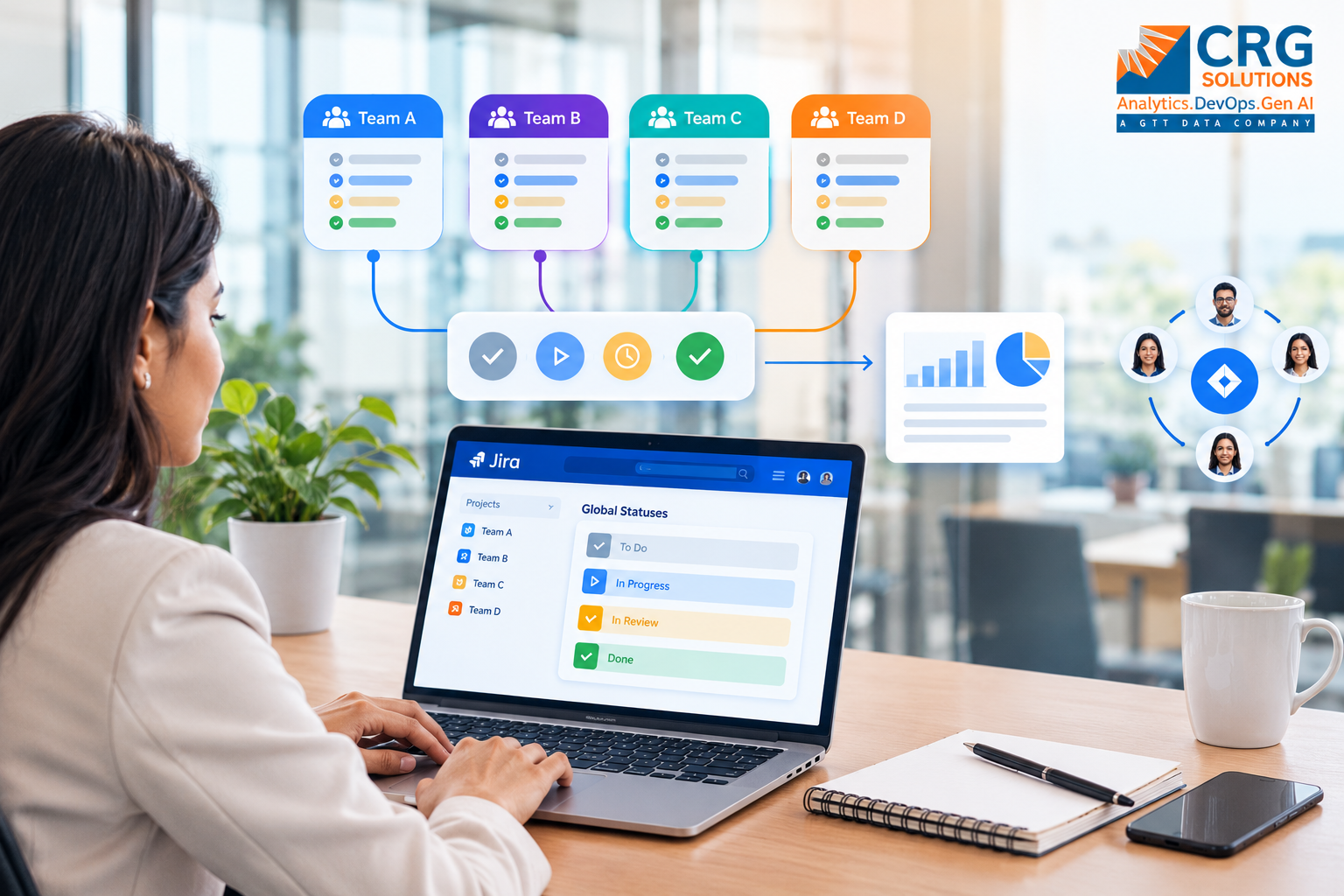
Atlassian is addressing this challenge with Global Statuses for team-managed workflows, which became generally available on October 12, 2026. This capability allows teams to use shared, site-wide statuses across team-managed spaces, helping improve consistency without requiring every team to use an identical workflow.
What Are Jira Global Statuses?
Jira Global Statuses allow administrators and teams to reuse common status definitions across team-managed workflows.
Instead of creating separate status labels for similar stages of work, organizations can establish shared statuses that teams can use across their workflows.
For example, teams may share standard statuses such as:
- To Do: Work is waiting to begin.
- In Progress: Work is actively being completed.
- In Review: Work is being reviewed or validated.
- Done: Work has been completed.
Teams can still structure their workflows around their needs, while common statuses make it easier to understand work across the organization.
Why Does This Matter for Enterprise Teams?
1. More Consistent Reporting
When teams use different labels for similar stages, leadership may struggle to compare progress across projects. Shared statuses can make reporting more meaningful and reduce confusion when reviewing delivery dashboards.
2. Better Cross-Team Collaboration
Projects often depend on several teams working together. Consistent status terminology helps teams understand whether work is waiting, underway, under review, or complete—without having to interpret each team’s terminology.
3. Stronger Workflow Governance
As Jira adoption grows, administrators need to balance flexibility with consistency. Global Statuses can support a common workflow language while allowing teams to retain appropriate autonomy over how they manage their work.
4. A More Scalable Jira Environment
Without shared conventions, workflow configuration can become harder to manage as the organization expands. Establishing common statuses can help create a more structured foundation for future growth.
How Should Enterprises Approach Global Statuses?
The goal should not be to make every team work identically. Instead, organizations should identify the stages that need a common definition and allow teams to customize the rest where necessary.
A practical approach is to:
- Review existing team-managed workflows and identify duplicate or similar statuses.
- Agree on standard status definitions and what each status means.
- Identify which statuses should be shared across teams.
- Update workflows carefully and communicate changes to users.
- Review reporting and workflow consistency as adoption grows.
The CRG Solutions Perspective
At CRG Solutions, we believe effective Jira governance starts with making work easier to understand not adding unnecessary restrictions.
Jira Global Statuses offer enterprises an opportunity to improve workflow consistency, simplify cross-team visibility, and establish stronger foundations for scalable delivery.
The objective is simple: let teams work their way, while helping the enterprise understand work in a consistent way.