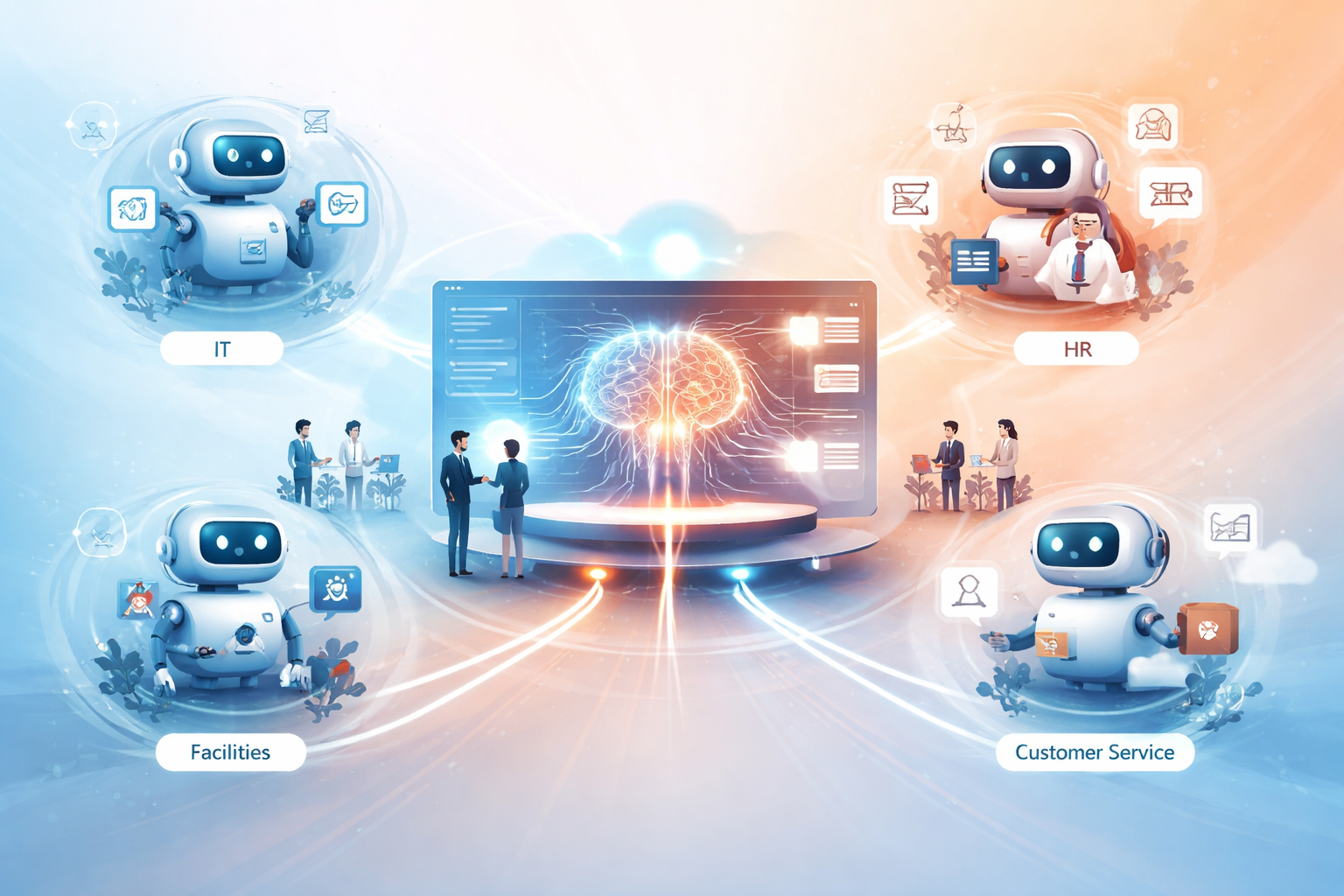
An AI co-pilot is a virtual helper designed to be alongside a human and enhance the human capabilities. It is based on generative AI or large language models (LLM’s). These AI-enabled applications assist agents and managers in performing monotonous or difficult jobs. For instance, they summarize data, create replies, direct tickets, sort issues, analyse trends and prevent possible problems.
Problem managers are responsible for incident and problem management from the very beginning to the end. They have to identify the root cause and escalate if necessary, then resolve and finally bring in measures to ensure that incidents do not recur. Problem managers now have a more effective and rewarding work life because of AI co-pilots in advanced diagnosis, revealing related incidents, suggesting possible solutions and recommending next steps.
Industry Best Practices for Using AI Co-pilots
- High-quality and updated data: AI co-pilots have faith in the information that they can access. Old and poorly managed data leads the AI to make bad suggestions. Therefore, all knowledge sources like internal wikis, policy documents, troubleshooting guides, etc., must be kept up-to-date, properly indexed and versioned.
- Human-in-the-loop for high-risk cases: Co-pilots can perform ticket classification and handle simple FAQs. When it comes to dissatisfied customers, regulatory matters, and safety issues, human intervention is necessary. Problem managers should have a direct and accessible route for escalation.
- Prompt and interface design matters: A well-thought-out design of the input prompt and the interface through which agents work with the system results in a long way. Natural language prompts, guided flows and explicit context such as prior interactions, sentiment, related incidents make agents trust and act on suggestions with competence. The closer the integration of co-pilots is to existing dashboards or tools, the less friction there will be.
- Monitoring, maintenance, and continuously improving manufacturing: AI co-pilots need to be monitored continuously. Metrics such as accuracy, resolution time, escalation rate, and satisfaction scores should be followed. If mistakes or misleading recommendations take place, these should be incorporated into the training data or the knowledge sources for future improvement of the performance.
- Phased roll-out: Start small with a tightly defined space (one ticket category for example, or internal problems for management tasks) and then scale up. Pilot projects are important to measure performance, find gaps and refine the workflow.
- Integration with existing workflow: Co-pilots are more helpful when they are included in the agent’s regular systems such as CRMs, ticketing tools, dashboards, and chat systems. Problem managers need the ease of access to relevant data like logs, customer history and related incidents to work with full context. The Microsoft Field Service co-pilot is one example of this: it enables technicians to access job instructions, documentation, and parts information quickly.
- Ethical standards, security, compliance and transparency: Sometimes a co-pilot may present incorrect or biased alternatives, thereby increasing the risk of revealing extremely confidential information. Organizations should check their access controls, data privacy, audit trails and the practice of overriding AI recommendations.
Challenges
- Errors: They might give an answer that is practically believable but actually wrong.
- Outdated knowledge: Non-updated data could lead to wrong recommendations.
- Over-automation: Heavy reliance on AI in complicated situations might result in missed sensitivities.
- Agent adoption and trust: Co-pilots will only work if agents are the ones using them. Engaging UX, good training and early successes play important roles.
- Data privacy and security: Co-pilots often work with very sensitive customer data, which is why governance needs to be cautious.
- Cost vs. ROI: The AI co-pilot implementation would require investments associated with installation, maintenance and monitoring facilities. Organizations should keep track of metrics like time savings, reduced escalations, and increased satisfaction to validate investment.
The Future of AI Co-pilots - Specialized co-pilots: The future will see tools that can diagnose, rectify and escalate all in one go.
- Multimodal support: The future of co-pilots will involve dealing with images, logs and voice inputs for issue triaging at a higher level.
- Advanced reasoning: Future co-pilots may not only be focusing on symptoms but will be identifying the root cause instead.
- Trustworthiness monitoring: Tools will ensure that AI suggestions are always monitored for quality and that any changes in reliability will be detected in time.
👉 Go to the part 2