There’s a quiet revolution happening in enterprise software procurement, and the numbers tell a compelling story. Atlassian crossed $6 billion in annual revenue with a 120% net retention rate, meaning existing customers aren’t just staying” they’re spending 20% more year-over-year. But here’s what makes 2026 different: the number of million-dollar deals doubled in Q2 alone.
What’s driving this surge? It’s not just features or functionality. Three market forces are converging to make Atlassian the platform of choice for mid-market and enterprise organizations navigating digital transformation.
The Data Centre Exodus Creates Urgency
Atlassian sunset Data Centre products on March 30, 2026, forcing thousands of organizations to make a strategic choice. Unlike typical migrations, this isn’t a “lift and shift” scenario” it’s a platform modernization moment. Organizations are discovering that moving to Atlassian Cloud isn’t about replacing old tools; it’s about fundamentally changing how work gets done.
The migration wave isn’t slowing down. Companies sitting on legacy Data Centre deployments are realizing that cloud-native capabilities like Rovo, automated backup and restore, and Common Data Model integrations simply don’t exist in their on-premise world. The question has shifted from “should we migrate?” to “how fast can we move?”
Product Teams Are Drowning” Atlassian Is the Lifeline
Atlassian’s State of Product 2026 report surveyed over 1,000 product professionals and revealed a crisis: 84% worry their current products will fail, and nearly half don’t have time for strategic planning. Product work is under unprecedented scrutiny, with tighter timelines and shifting market demands.
Yet here’s the paradox: 85% of product managers say they have a seat at the strategic table, but only 12% find driving measurable business results rewarding. Teams are empowered but overwhelmed. They need systems that connect strategy to execution without adding cognitive load.
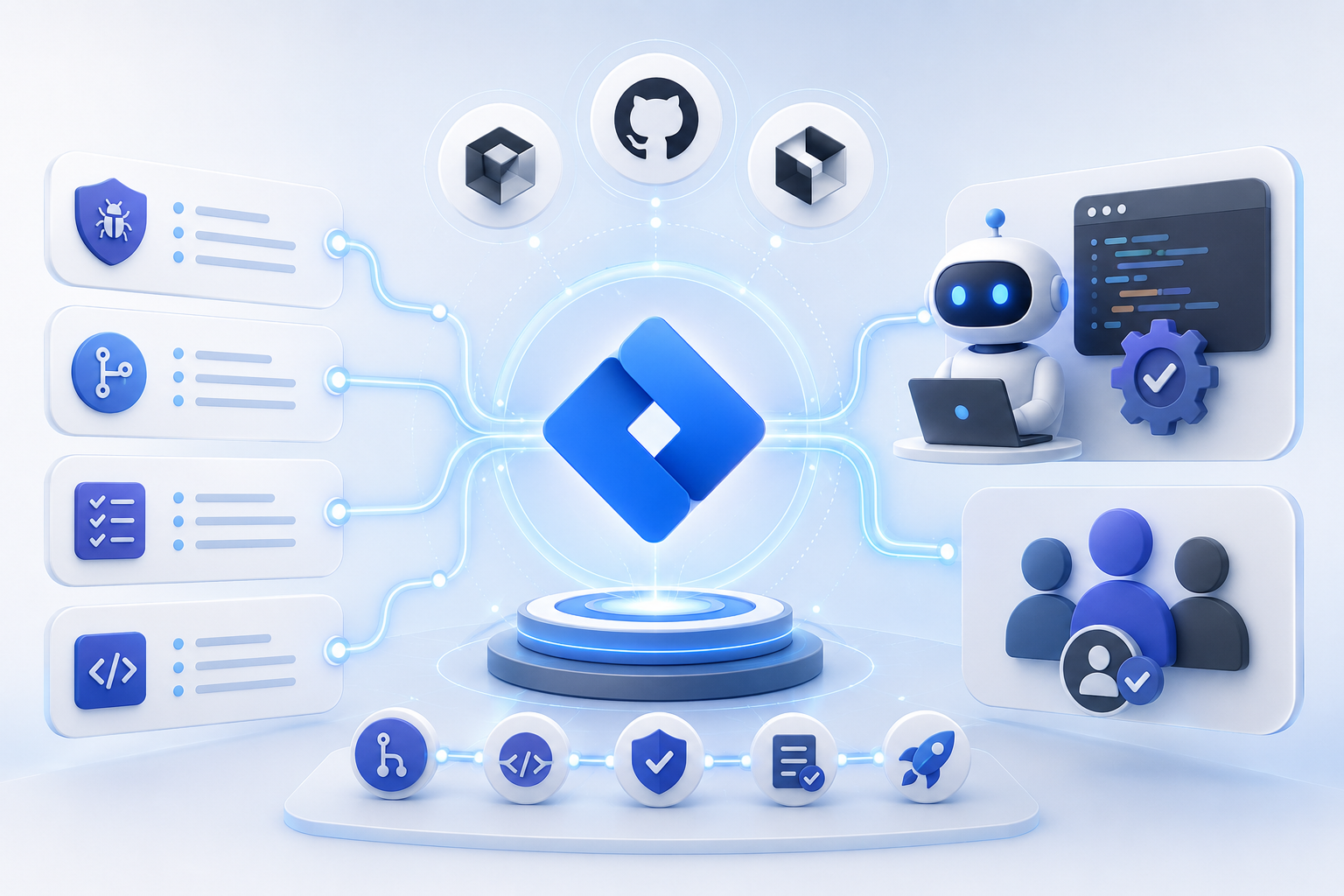
This is where Jira Software, Jira Product Discovery, and Confluence converge into what Atlassian calls a “System of Work.” Organizations aren’t buying individual products anymore” they’re investing in integrated environments where roadmaps, backlogs, documentation, and delivery metrics live in one governed ecosystem.
AI Agents Are Moving from Hype to Production
The enterprise AI conversation changed in February 2026. Atlassian launched agents in Jira open beta and expanded Model Context Protocol investments, with enterprises driving nearly 50% of all Rovo MCP server usage. This isn’t experimental” it’s operational.
What makes Atlassian’s AI play different? Context. Rovo doesn’t sit outside your workflows begging for adoption; it lives inside Jira issues, Confluence pages, and service queues where work already happens. Teams can assign work to AI agents, mention them in comments for iterative collaboration, and embed them directly into workflows while respecting project permissions and audit trails.
The proof is in adoption metrics. Customers on paid Atlassian editions drive 93% of Rovo usage, signaling that AI capabilities are becoming business-critical, not nice-to-have experiments.
What This Means for Your Organization
If you’re evaluating Atlassian or reconsidering your investment, three strategic bets are worth making in 2026:
Bet on Cloud Enterprise now. Forrester research shows organizations migrating to Atlassian Cloud Enterprise achieve 230% risk-adjusted ROI over three years. The business case isn’t theoretical” it’s proven.
Architect for AI from day one. Don’t treat Rovo as a future consideration. Design your Jira projects, Confluence spaces, and service management workflows assuming AI agents will participate. Build the knowledge graph and governance models that make AI valuable, not chaotic.
Choose implementation partners strategically. The difference between a successful Atlassian deployment and a failed one isn’t the software” it’s the expertise guiding adoption, governance, and change management. Partners who understand enterprise service management, ITSM best practices, and cloud migration nuances deliver measurable ROI faster.
The $6 billion revenue milestone isn’t just an Atlassian win” it’s a signal that enterprises have found a platform worth doubling down on. The question for your organization isn’t whether Atlassian fits your stack. It’s whether you’re ready to move at the speed the market demands.