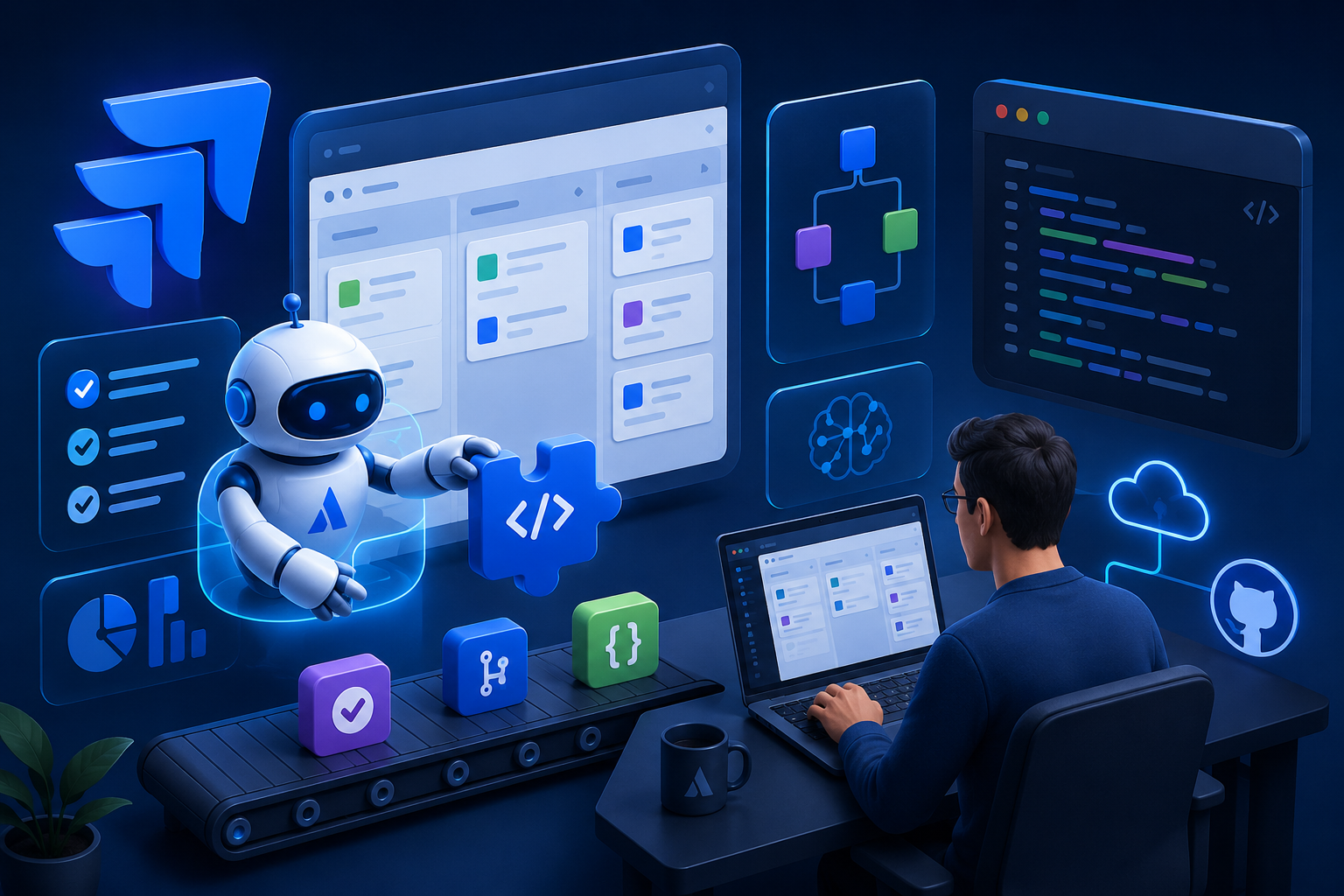
AI in software development is moving beyond answering questions and generating suggestions. The next shift is toward AI agents that actively participate in work and Jira is evolving rapidly in that direction.
Atlassian’s latest Jira updates show a clear move toward an agent-native work environment, where AI can help teams break down work, automate processes, manage tasks, and support delivery without requiring users to manually configure every step.
From Assistance to Action
Traditional AI assistants help employees find information or generate content. Agentic AI goes a step further: it can understand context, make decisions within defined boundaries, and take action.
Jira is bringing this model directly into everyday work.
Teams can now use Rovo to break down parent work items into smaller tasks, generate automation rules using natural language, and assign AI agents to multiple work items. These capabilities reduce the manual effort involved in planning and executing repetitive work.
Managing AI Agents at Scale
As enterprises introduce more AI agents, simply enabling them is not enough. Organizations need visibility and control.
Jira’s newer agent management capabilities allow teams to view available agents, understand what triggers them, configure prompts and context, and establish autonomy and approval controls.
This creates an important foundation for enterprise AI governance: AI can move faster without operating outside established business rules.
AI Becomes Part of the Delivery Lifecycle
The latest developments also show AI expanding across the software development lifecycle.
Atlassian recently introduced Code Reviewer, designed to provide a fast first review on pull requests and help development teams identify issues earlier in the delivery process.
Combined with Jira’s agent capabilities, this points toward a future where AI supports multiple stages—from planning and task creation to automation, development, and review.
What This Means for Enterprises
For enterprise technology leaders, the opportunity is bigger than productivity.
AI agents can help organizations:
- Reduce repetitive operational work
- Accelerate planning and execution
- Improve consistency across workflows
- Give teams more time for strategic work
- Create measurable visibility into AI-assisted delivery
- Establish governance around autonomous AI activity
However, successful adoption requires more than turning features on. Enterprises need the right governance, workflows, permissions, adoption strategy, and measurement framework.